Modern SMEs treat every print touchpoint as part of a connected customer experience, yet bill books still get ignored once ecommerce dashboards and POS apps steal attention. When you reframe a bill book as a verified handshake between fulfillment teams, accountants, and clients, it becomes a low cost medium for storytelling. It reinforces your reliability, documents the service promise, and trains staff to stay consistent. This article outlines a step by step framework to turn routine paperwork into a marketing asset.
Begin with an audit of every transaction type, from cash on delivery slips to annual retainers. Log what information each department needs, where errors tend to occur, and how quickly documents move from counter to archive. Interview frontline staff about handwriting pain points, storage frustrations, and customer reactions. These qualitative notes will help you pick the right paper stock, ply count, and security elements while ensuring the layout truly reflects how your business operates.
Next, map regulatory and data governance requirements. Include GST or VAT references, digital signature placeholders, and privacy disclaimers when collecting personal information. If you work across multiple states or countries, design modular panels that let you swap tax IDs or compliance statements without rewriting the entire block. This preparation keeps auditors satisfied and shows customers that your documentation standards match those of enterprise competitors.
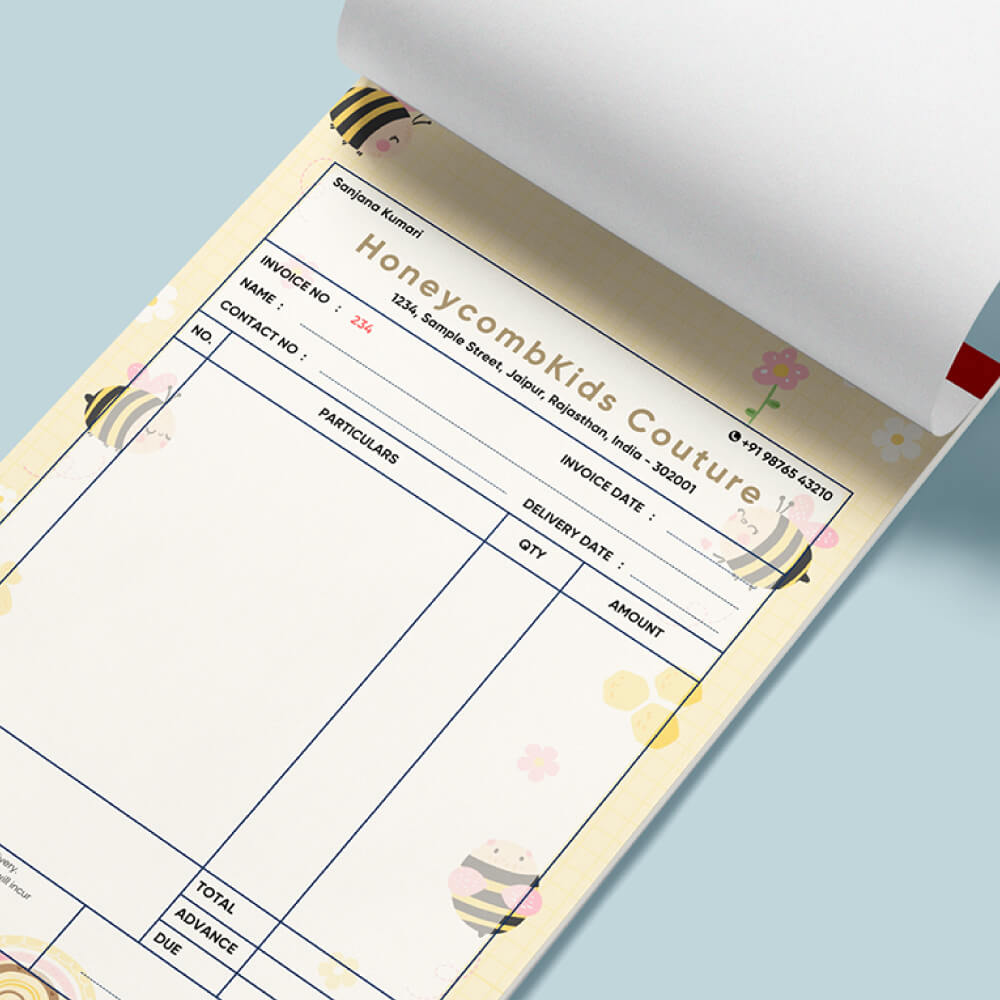
Once compliance guardrails are set, move into design hierarchy. Anchor the top third with your logo, tagline, and service promise using the same color ratios found on your website and packaging. Reserve the middle third for transaction details laid out with generous line spacing, bold column headings, and subtle shading to guide the eye. Dedicate the final third to calls to action such as QR codes that open support chat, reorder portals, or testimonial landing pages.
Treat every bill book as a bridge to digital experiences. Dynamic QR codes can trigger UTM tagged surveys, while short URLs can segment customers into loyalty tiers. NFC stickers are now affordable in small batches and let B2B clients reorder with a tap. By monitoring scan data inside your analytics stack, you can measure how many offline interactions evolve into new quotes or reviews, proving that stationery investments influence revenue.

Operational rigor keeps the system scalable. Number every set, store batches per department, and log consumption inside inventory software. For mobile teams, package bill books with weather resistant covers and elastic straps so they survive commutes. Establish a monthly huddle where sales, finance, and production review sample pages to catch smudging, misprints, or handwriting drift before a customer complains.
Sustainability expectations continue to rise, so outline your material choices. Explain on the back cover that you use responsibly sourced paper, vegetable based inks, or recyclable binding. Offer clients the option to return spent books for shredding and recycling. These small gestures protect the environment and give procurement officers another reason to choose you over a cheaper competitor.
Finally, run controlled experiments. Launch two design variants per quarter, alternating icons, footer offers, or value propositions, and track which layouts generate the most scans or referrals. Feed results into your marketing automation platform so winning messages appear consistently across email signatures, packaging slips, and proposal decks. Close the loop by sharing case studies with sales reps so they can point to real numbers when presenting samples to procurement teams.
By approaching bill books with this mix of compliance rigor, brand storytelling, digital integration, and sustainability, modern SMEs transform a basic stationery line item into a measurable growth channel. Treat each reorder as a sprint review, document the insights, and your humble bill book will keep pace with omnichannel campaigns instead of lagging behind them.